


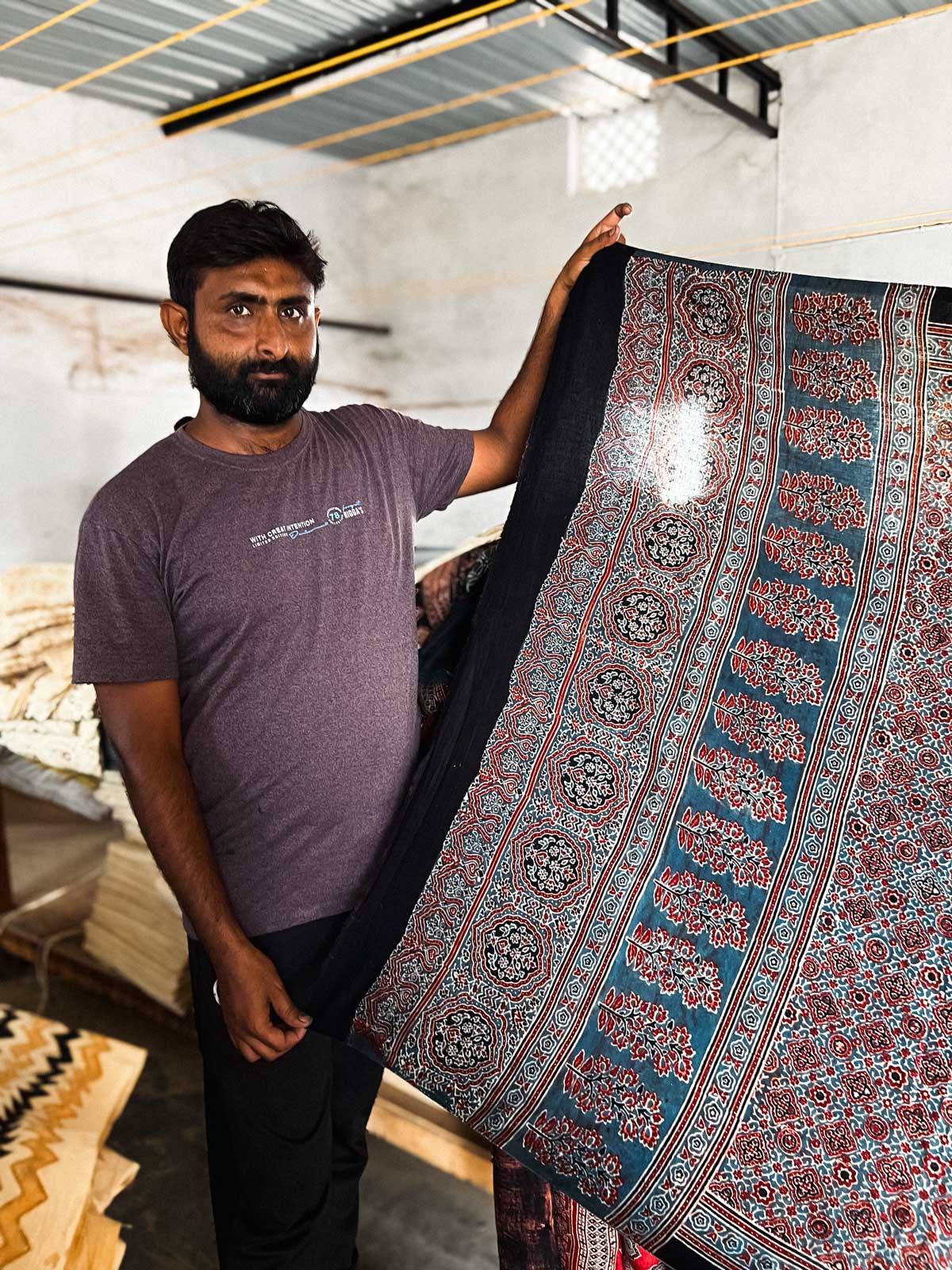
Over 4,000 years old, the Ajrakh blockprint technique originates from the arid regions of Kutch in Gujarat. It is one of the most iconic symbols of the harmony between humankind and its environment. Each piece is the result of a complex process, often lasting several weeks, where each step is imbued with meticulous craftsmanship passed down through generations.
Each block of wood is hand-carved and meticulously engraved to create intricate and harmonious patterns. But its magic lies in its combination with natural dyes. Indigo, henna, turmeric, pomegranate: each hue is drawn from the earth's resources, lending the fabric deep and vibrant colors.
The repetitive, sometimes hypnotic, geometric patterns tell a timeless story, inspired by celestial constellations, natural elements, and symbols of protection. Ajrakh, whose name means "to keep forever" in Arabic, is a celebration of permanence, an ode to continuity in a constantly changing world.
The Ajrakh process is a true alchemy: it begins with the preparation of the cotton fabric, which is immersed in a solution of lime milk and natural gum. Then come the multiple successive impressions using blocks and resistors made from clay paste. Between each impression, the fabric is washed and dyed several times, creating layers of color and pattern that captivate with their richness and detail.
Each scarf, each Ajrakh drape is an affirmation of individuality, a resistance to uniformity. Each creation embodies the spiritual depth of Gujarat and the dignity of handcrafted work.
Today, the art of Ajrakh block printing faces numerous challenges: competition from synthetic textiles, the rise of industrialization, and the erosion of ancestral knowledge. Supporting this art means preserving an essential part of humanity. It means encouraging artisans to continue creating, to pass on their passion, and to resist oblivion.
0 comments